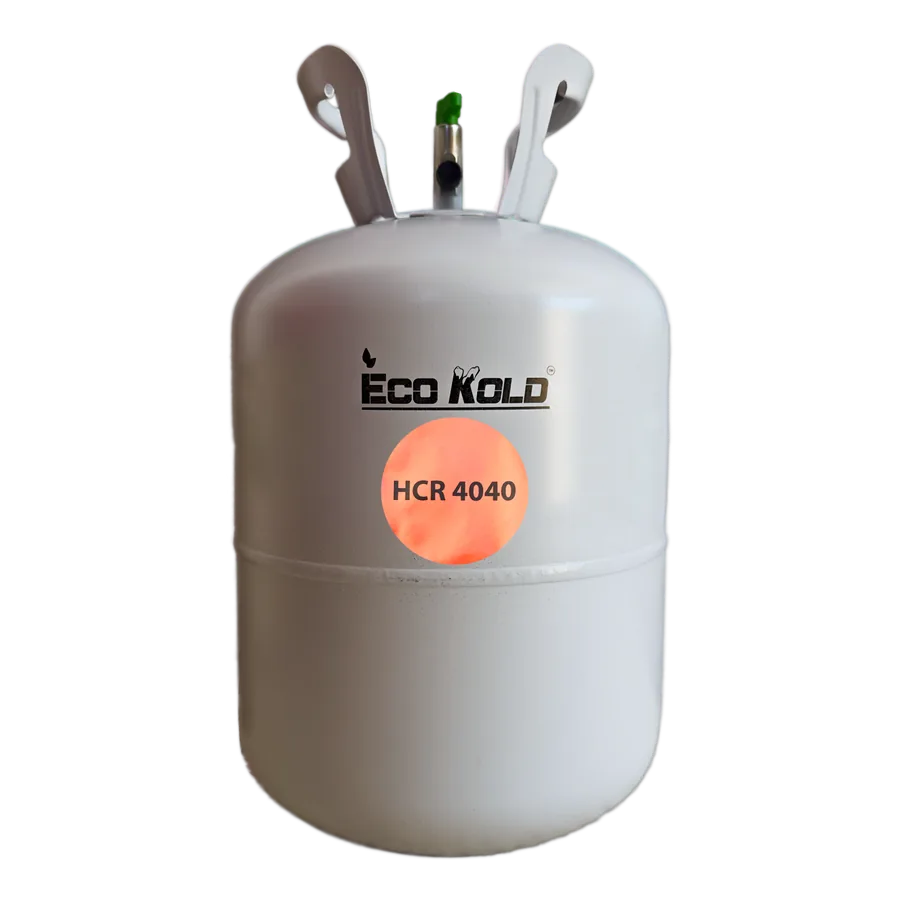
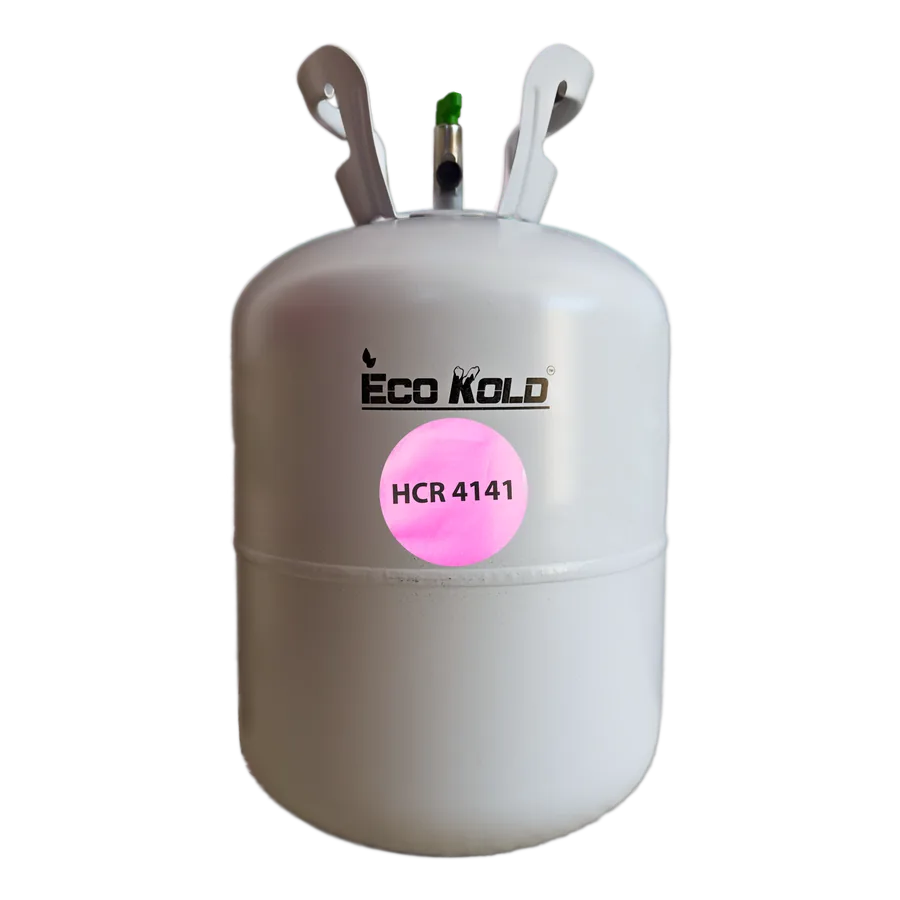
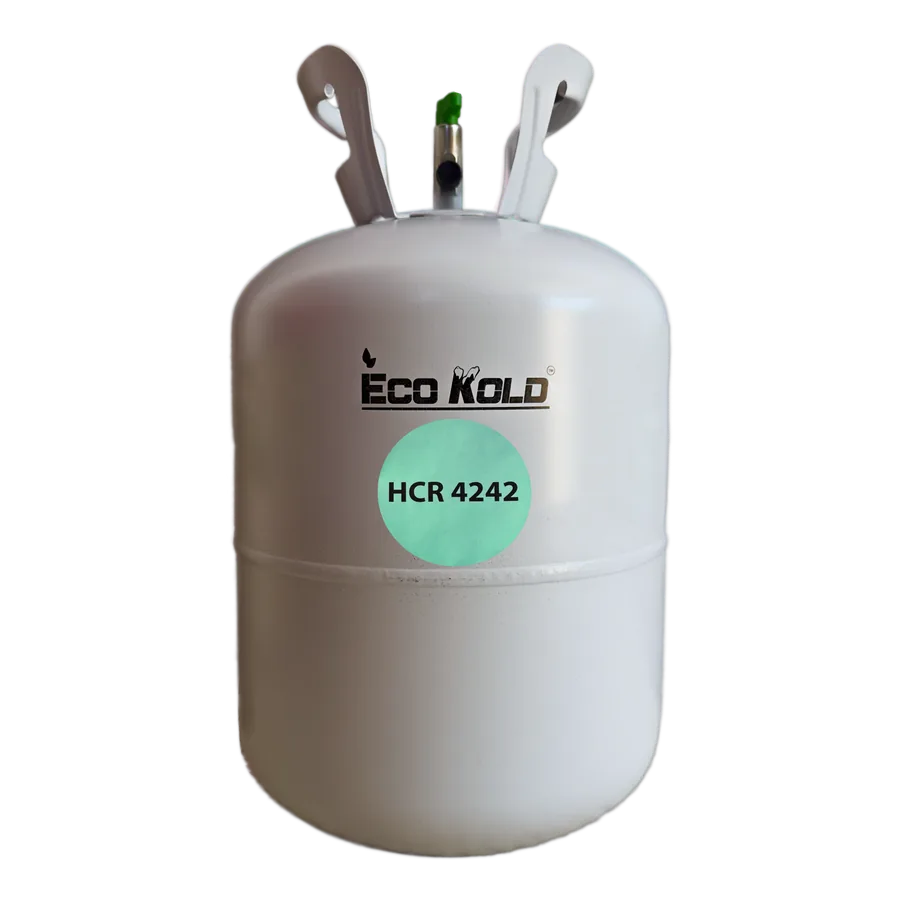
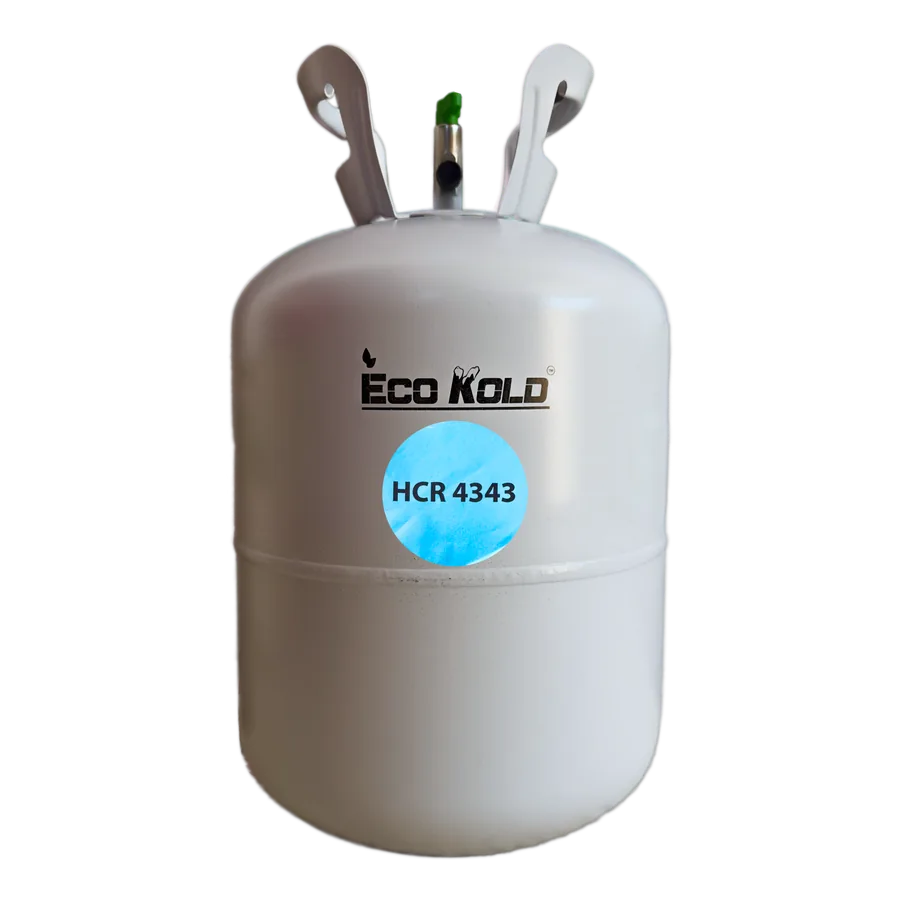
Three problems converging on the cooling industry, and one drop-in answer.
Energy costs are climbing. AC demand is climbing faster. And the global-warming impact of the refrigerants those systems run on is, finally, getting regulated out. The AIM Act, Kigali Amendment, and EU F-gas all point the same direction: toward refrigerants with a GWP (a measure of how much a gas warms the planet compared to CO₂) in single digits. Eco Kold HCR sits at 1.
Refrigerant progression.
Four generations of refrigerant chemistry, each graduating past the last. ODP is Ozone Depletion Potential; GWP is Global Warming Potential.

Eco Kold blends are HC natural refrigerants: GWP under 1 and zero ODP. Meet the blend family →
Why the cooling industry is being pushed onto a single track.
Energy bills aren't easing.
Cooling is one of the largest single line items on commercial electric bills: often 30–60% of summer-month consumption in warm climates. Every percentage point of efficiency translates straight to operating margin.
Global AC load is growing.
The IEA projects cooling demand to triple by 2050, driven by rising temperatures and emerging-market growth. Without efficiency gains, that demand pushes grid build-out and emissions in lockstep.
The refrigerants themselves are the problem.
Synthetic refrigerants (HFCs like R-404A and R-410A) are 1,800× to 3,900× more potent than CO₂ at trapping heat. Every kilogram that leaks is the equivalent of multiple tonnes of CO₂.
The phase-down isn't proposed anymore. It's law.
85% HFC production cut by 2036.
The American Innovation and Manufacturing Act steps HFC production and import down through 2036 in allocation cycles. EPA's technology-transitions rule sets a 150-GWP limit on new commercial refrigeration and a 700-GWP limit on new residential and light-commercial AC and heat pumps.
Same direction, different timelines.
The Kigali Amendment to the Montreal Protocol commits 170+ countries to step HFCs down 80–85% by mid-century. The EU F-gas Regulation already sets GWP thresholds at 150 (some categories) and 750 (others) for new equipment, with quota cuts compounding through 2030. Hydrocarbon refrigerants meet every published threshold with margin to spare.
The hidden cost of "compliant new equipment," and the way around it.
Hundreds of millions of refrigeration and AC systems are already installed in restaurants, offices, and industrial facilities worldwide. To meet the new GWP thresholds by replacement, every one of those systems would need to be torn out and rebuilt at enormous capital cost.
Or, you swap the refrigerant. Eco Kold HCR is engineered as a drop-in retrofit. Recover the old refrigerant, vacuum the system, recharge by weight with the matching HCR blend. Same compressor. Same evaporator. New GWP: <1. Not for retrofit of split-system air conditioners or heat pumps, which US EPA lists as unacceptable for hydrocarbon refrigerants.
No equipment write-off. No capital request. Just a service window and a cylinder.
"We have been using this product at our 3 locations for the last 7 years. Our electricity bill was reduced by an average of 45%."
Ready to take your install off the phase-down clock?
Send us the equipment make, model, and current refrigerant. Within one business day you'll have a recommended Eco Kold blend, quantity, pricing, and an introduction to a certified installer in your region.