What "low-GWP" actually means, and why the gap between options is enormous.
Refrigerant regulation moves fast. The phase-downs vary by jurisdiction. The replacement chemistries have wildly different climate footprints. This page is the practical version: what the schedules require, what the math actually says, and how the choices compare against each other.
Refrigerant progression.
Four generations of refrigerant chemistry, each graduating past the last. ODP is Ozone Depletion Potential; GWP is Global Warming Potential.
Eco Kold blends are HC natural refrigerants: GWP under 1 and zero ODP. Meet the blend family →
Every refrigerant on the market, by GWP, at the same scale.
Hover any bar to read the exact GWP. The single Eco Kold mark at the bottom is the entire HCR product line: every blend carries a GWP of <1. The legacy gases climb to nearly 4,000.
"GWP" is a single number that compares climate impact.
GWP (Global Warming Potential) is the warming effect of a gas relative to carbon dioxide, measured over a 100-year window. CO₂ is the baseline at GWP 1. A refrigerant with a GWP of 2,000 traps 2,000 times more heat in the atmosphere over a century than the same mass of CO₂.
GWP <1 · matches CO₂
Hydrocarbon refrigerants are naturally occurring molecules (a propane and isobutane base) that carry the same climate footprint as the carbon dioxide already in the atmosphere. No phase-down schedule applies; they sit at the floor of the GWP scale.
GWP <1 to ~700 · the "low-GWP" tier
The newer hydrofluoroolefin (HFO) refrigerants like R-1234yf, and lower-GWP HFC blends like R-32, are marketed as low-GWP. That's true relative to the gases they replace, but "low" here still spans anywhere from a few times to several hundred times the impact of CO₂, with atmospheric lifetimes measured in years.
GWP 1,400–4,000 · the gases being phased down
R-134a (1,430), R-22 (1,810), R-410A (2,088), R-404A (3,922). These are the refrigerants in most installed systems today. They're being phased down by the AIM Act in the U.S. and the Kigali Amendment globally, but the existing equipment using them is still running.
The phase-downs that are driving the market.
Three regulatory frameworks are reshaping which refrigerants get manufactured, imported, and used. They overlap, they vary by jurisdiction, and they're all moving in the same direction: away from high-GWP gases.
AIM Act · phase-down through 2036
The American Innovation and Manufacturing Act mandates an 85% production-and-import cut for HFCs by 2036. Allocation steps every few years, already biting on R-404A and R-410A availability. SNAP-listed alternatives are the explicit replacement path.
Kigali Amendment · 2016 Montreal Protocol update
Ratified by 150+ countries. Phases down HFC production globally: developed countries 85% cut by 2036, developing countries by 2047. Why the supply of legacy refrigerant is getting tighter and pricier worldwide.
EU F-gas Regulation · 79% cut by 2030
The most aggressive schedule of the three. Most R-404A applications are already banned for new equipment. R-410A is on the same path. Hydrocarbon blends are explicitly favored: the regulation incentivizes refrigerants with GWP < 150.
"GWP 1" vs "GWP 700" sounds close. It isn't.
A 700-GWP refrigerant feels like a huge improvement over a 2,088-GWP refrigerant, and it is. But "low" is doing a lot of work in that comparison. Here's what the absolute climate impact looks like for the same 1 kg of refrigerant venting to atmosphere.
1 kg vented · CO₂-equivalent impact
| Eco Kold HCR · GWP <1 | = 1 kg CO₂ equivalent |
|---|---|
| R-32 · GWP 675 | = 675 kg CO₂ equivalent |
| R-134a · GWP 1,430 | = 1,430 kg CO₂ equivalent |
| R-22 · GWP 1,810 | = 1,810 kg CO₂ equivalent |
| R-410A · GWP 2,088 | = 2,088 kg CO₂ equivalent |
| R-404A · GWP 3,922 | = 3,922 kg CO₂ equivalent |
What this means at facility scale
A 50-cylinder supermarket cooling estate on R-404A, assuming one cylinder vented per year due to leaks and service losses, carries roughly the same annual climate impact as ~85 cars driven for a year.
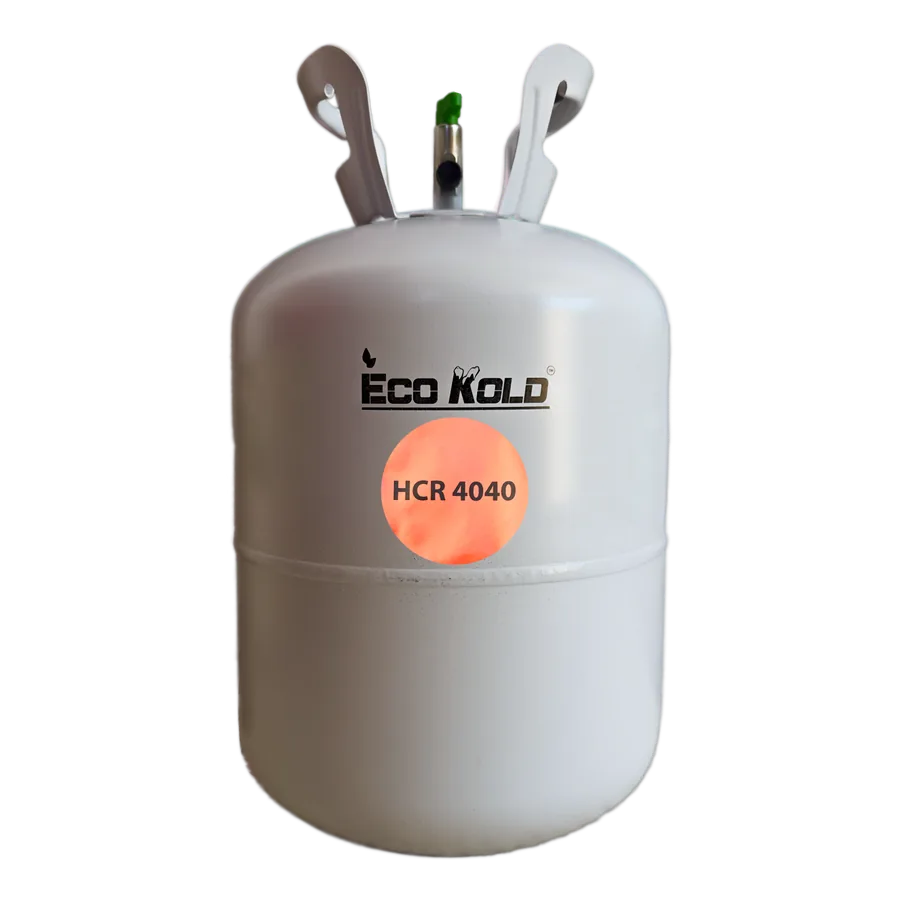
The same fleet retrofitted to HCR 4040 (at GWP <1) drops that to roughly the impact of 0.02 cars. That's the difference being made by the GWP number, not by energy efficiency. The energy reductions are additional.
For most cooling estates, switching refrigerants is the single largest Scope 1 emission reduction available without replacing equipment.
Why hydrocarbon refrigerants sit at the floor of the GWP scale.
"Natural" refrigerants are the molecules that exist in the atmosphere already: CO₂, ammonia, water, hydrocarbons. They don't add new chemistry to the environment. Synthetic refrigerants do.
Atmospheric persistence
HFCs persist in the atmosphere for 14–270 years. HFOs (the "low-GWP" alternatives) for 1–30 years. Hydrocarbons break down in days to weeks, the same way the propane in a backyard grill does.
Where they come from
HFCs and HFOs are manufactured molecules: chemical plants synthesize them through multi-step fluorination. Hydrocarbons are byproducts of natural-gas processing and petroleum refining. The carbon footprint of making the refrigerant is far lower for hydrocarbons.
What happens when it leaks
An HFC leak is a multi-decade climate event. A hydrocarbon leak is, at worst, a local fire-safety consideration handled by code, and it rapidly dissipates without warming the planet.
Which Eco Kold blend replaces which refrigerant.
Sourced from the BHCR engineering specification. Each row maps an Eco Kold blend to the synthetic refrigerants it's certified to replace, with the GWP for each and the typical application area.
Eco Kold blends are not compatible with centrifugal compressors. Compatible with both mineral and synthetic oils. The existing refrigerant must be verified before any replacement. Always follow the official installation guidelines.
What "low-GWP" actually means.
The questions buyers and sustainability teams ask most often about hydrocarbon refrigerants, regulatory schedules, and EPA compliance.
What are low-GWP refrigerants?
Low-GWP refrigerants are cooling agents with a Global Warming Potential significantly lower than the legacy HFC refrigerants they replace. Eco Kold hydrocarbon refrigerants carry a GWP of <1, the same as CO₂. By comparison, R-22 sits at 1,810, R-134a at 1,430, R-410A at 2,088, and R-404A at 3,922. Low-GWP refrigerants reduce both the climate impact of refrigerant leaks and, on most retrofits, the energy consumption of the cooling system.
What is the GWP of HCR refrigerants?
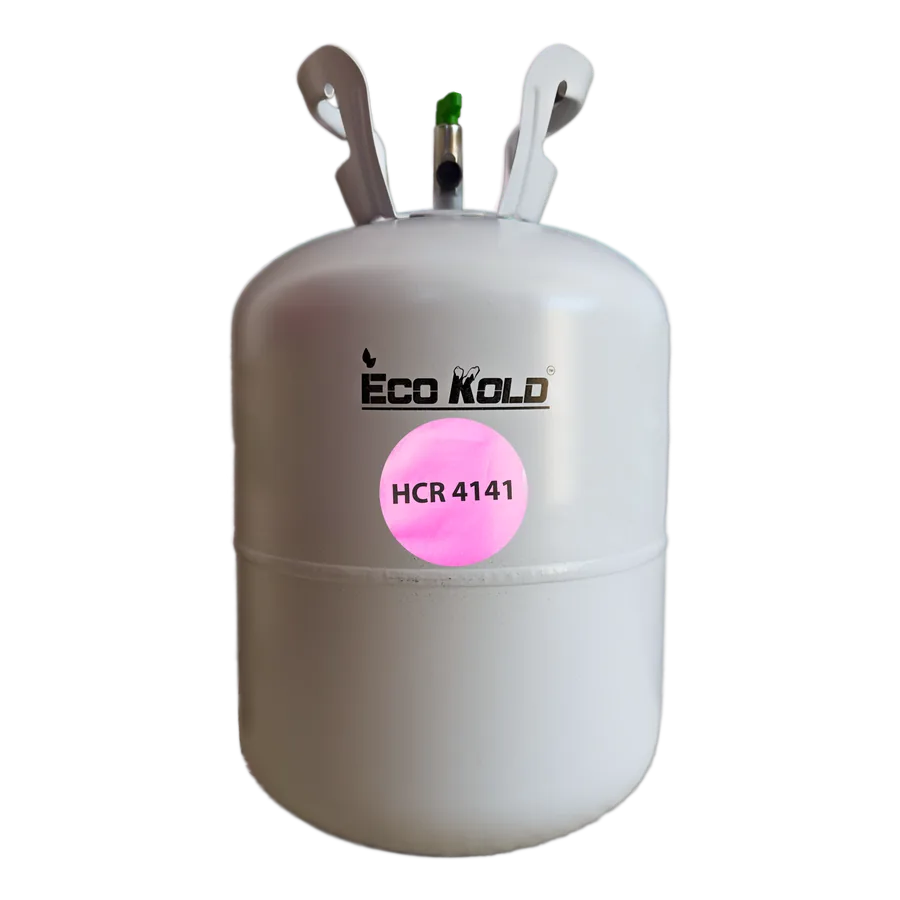
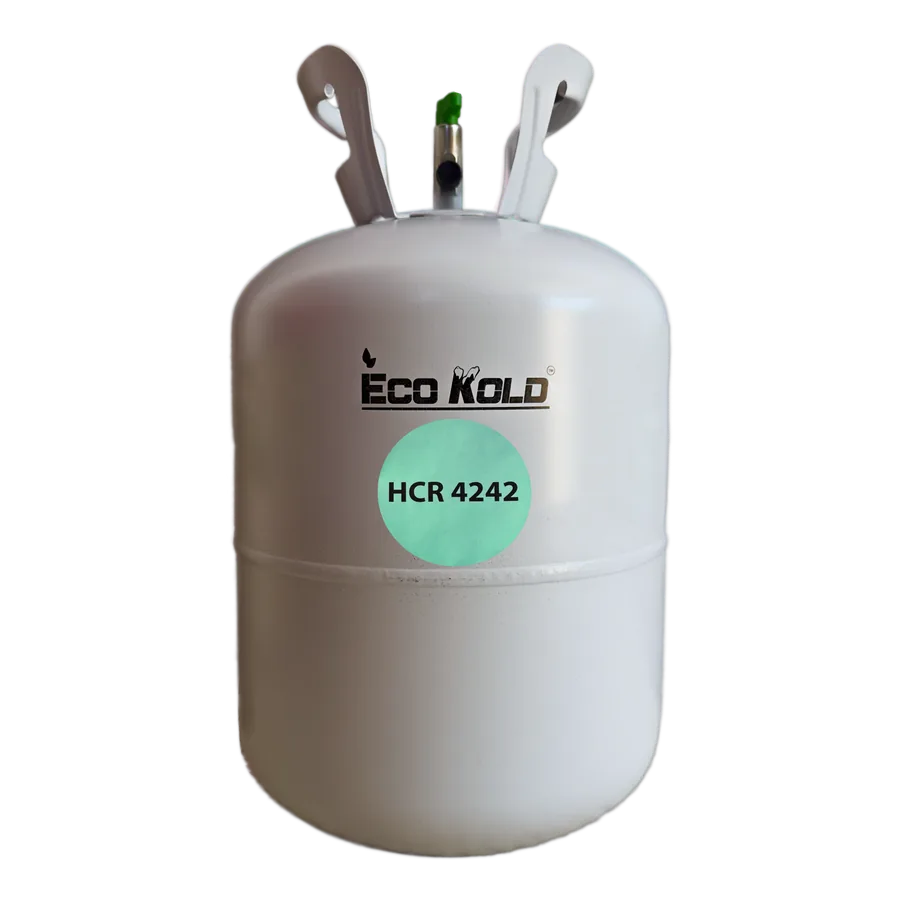
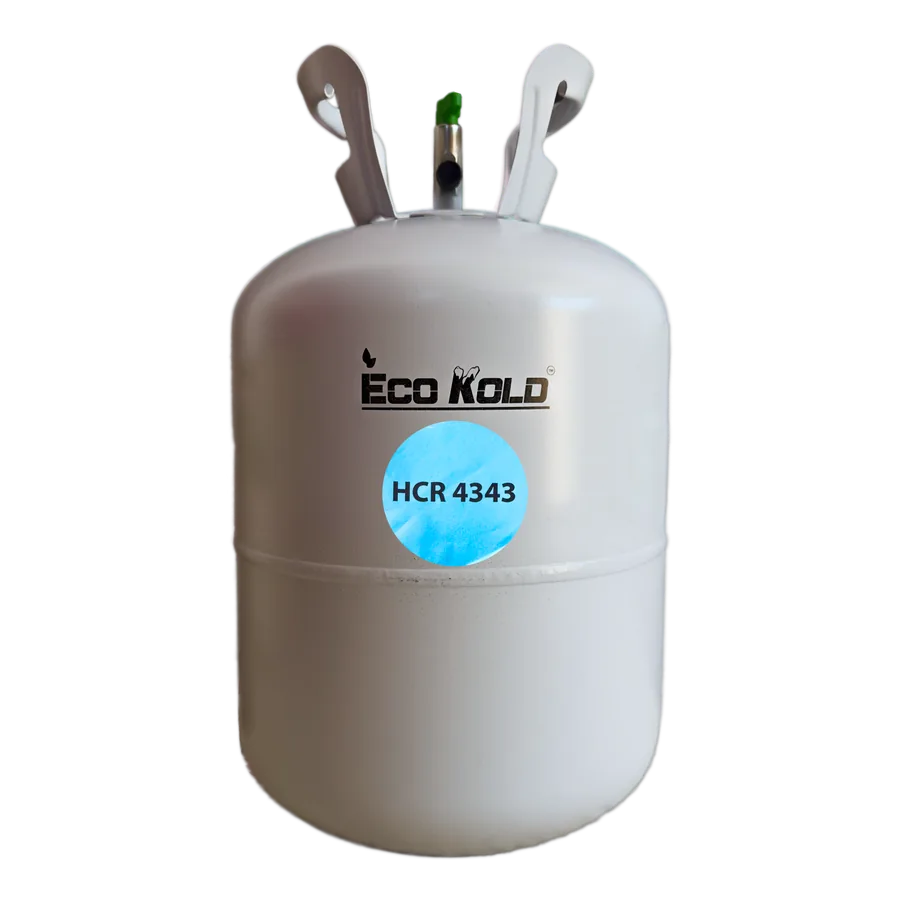
Every Eco Kold HCR refrigerant (4040, 4141, 4242, 4343, and 4343A) has a Global Warming Potential of <1 over a 100-year window. That is the floor of the GWP scale, matching CO₂. The replacement matrix above shows which HCR replaces which synthetic refrigerant.
How does HCR compare to HFO refrigerants like R-1234yf?
HFO refrigerants are hydrofluoroolefins, chemically related to HFCs but engineered for lower GWP. Common HFO blends range from R-1234yf at a GWP below 1 to mixed HFC/HFO blends at GWP 400–700. They are an improvement over legacy HFCs but still rely on synthetic fluorinated chemistry with multi-year atmospheric persistence. Hydrocarbon refrigerants are naturally occurring molecules that break down in days to weeks. The comparison is detailed in the synthetic vs natural section.
What is the AIM Act phase-down schedule for HFCs?
The American Innovation and Manufacturing Act mandates an 85% production-and-import cut for HFCs by 2036, stepped down in allocation cycles every few years. R-404A and R-410A availability is already tightening as a result. SNAP-listed alternatives are the EPA’s explicit replacement path.
Are hydrocarbon refrigerants compliant with EPA regulations?
EPA SNAP review is in progress and varies by product: HCR 4141 is submitted and pending a final ruling; HCR 4040, 4343, and 4343A are submitted and under review; the EPA SNAP submission for HCR 4242 is pending. We don't claim a SNAP listing where the status is pending, under review, or not submitted. Approved end-uses and availability vary by country, so contact us for the current status in your market.
Have a system running on R-22, R-410A, R-404A, or R-134a?
Send us the equipment make, model, and current refrigerant. We'll match the right Eco Kold blend, quote pricing, and connect you with a certified installer in your region, usually within one business day.