The natural refrigerant for chillers and cold-chain.
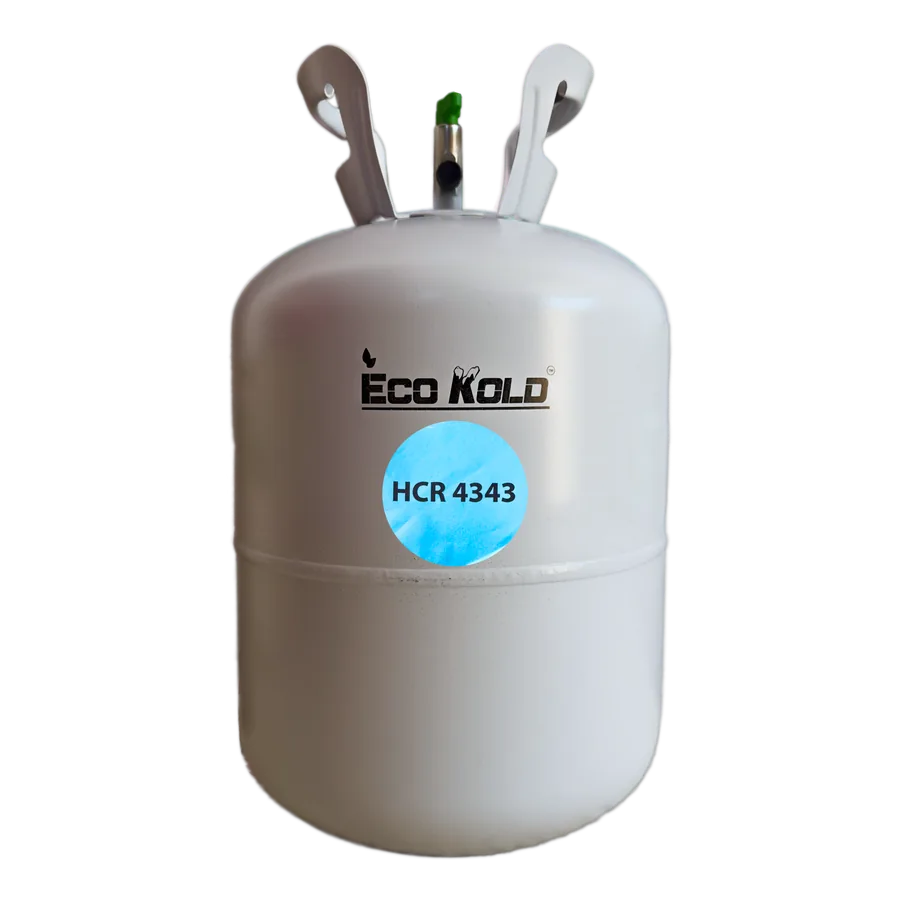
HCR 4343A is the broadest-spectrum Eco Kold blend, engineered for commercial chillers, refrigerated transport, and cold-chain logistics. The only blend in the line rated for transport applications. Not for vehicle air conditioning, where US EPA lists hydrocarbons as unacceptable. Drop-in for R-134A with 65% less charge, 44% lower system pressure, and a GWP of <1.
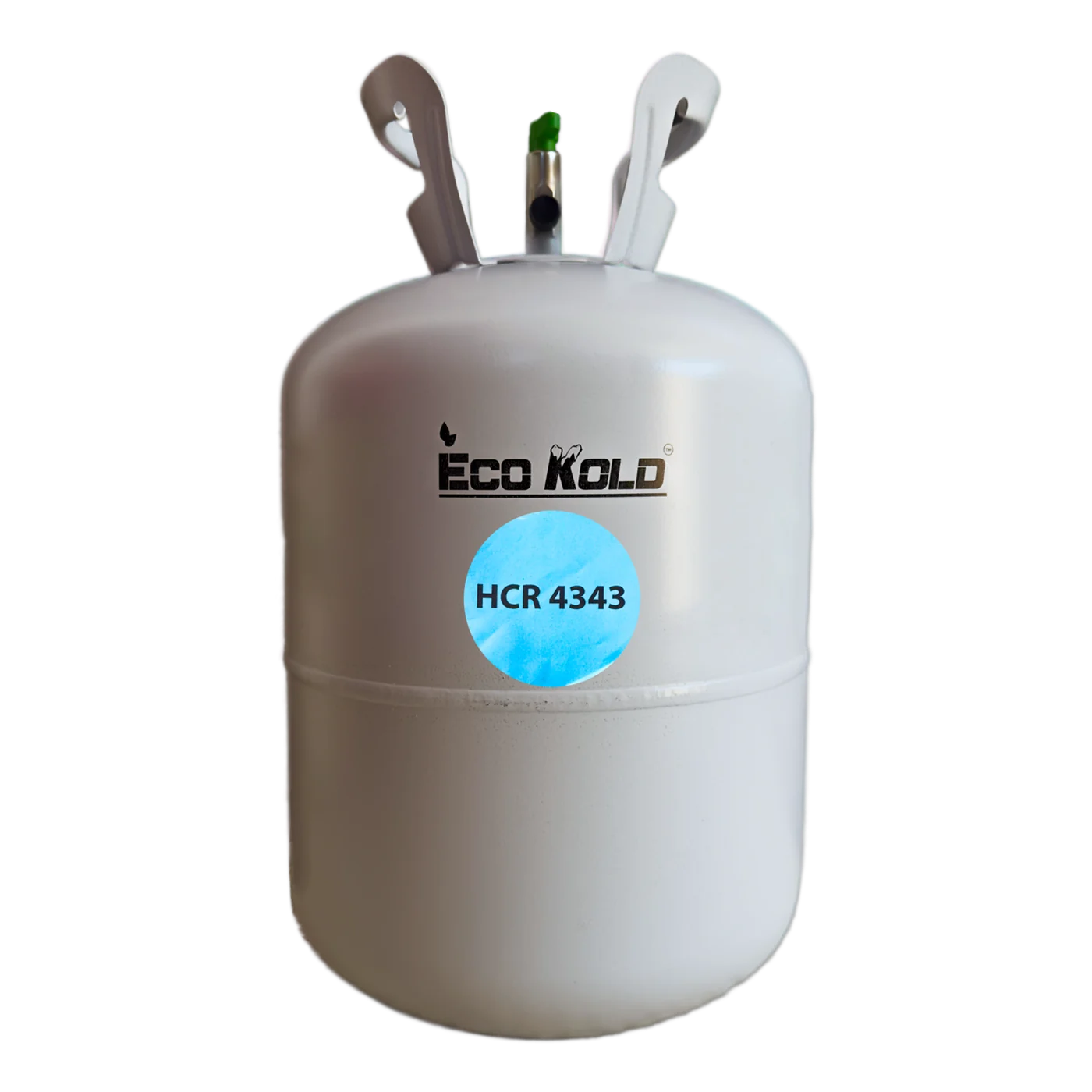 HCR 4343A · 2.5kg cylinder
A natural refrigerant for the systems that run all day.
Chillers and transport refrigeration run constantly. The pressure and charge advantages of HCR 4343A compound over a system's life: less compressor strain, less leak risk, less energy draw.
The systems most of the field is already running on.
Water-cooled · process cooling · district
Chillers cycle 24/7. HCR 4343A delivers the same cooling capacity at 56% lower pressure, extending compressor and seal life while cutting energy use 30–50%.
Refrigerated trucks · reefers · pharma logistics
The only Eco Kold blend rated for transport applications. HCR 4343A holds set-point under vibration and thermal cycling better than R-134A, with no GWP exposure on a road accident.
Different refrigerant? Different blend.
HCR 4343A covers chillers and cold-chain on R-134A. The other four Eco Kold blends cover low-temp refrigeration, AC, legacy R-22 systems, and plain R-134.
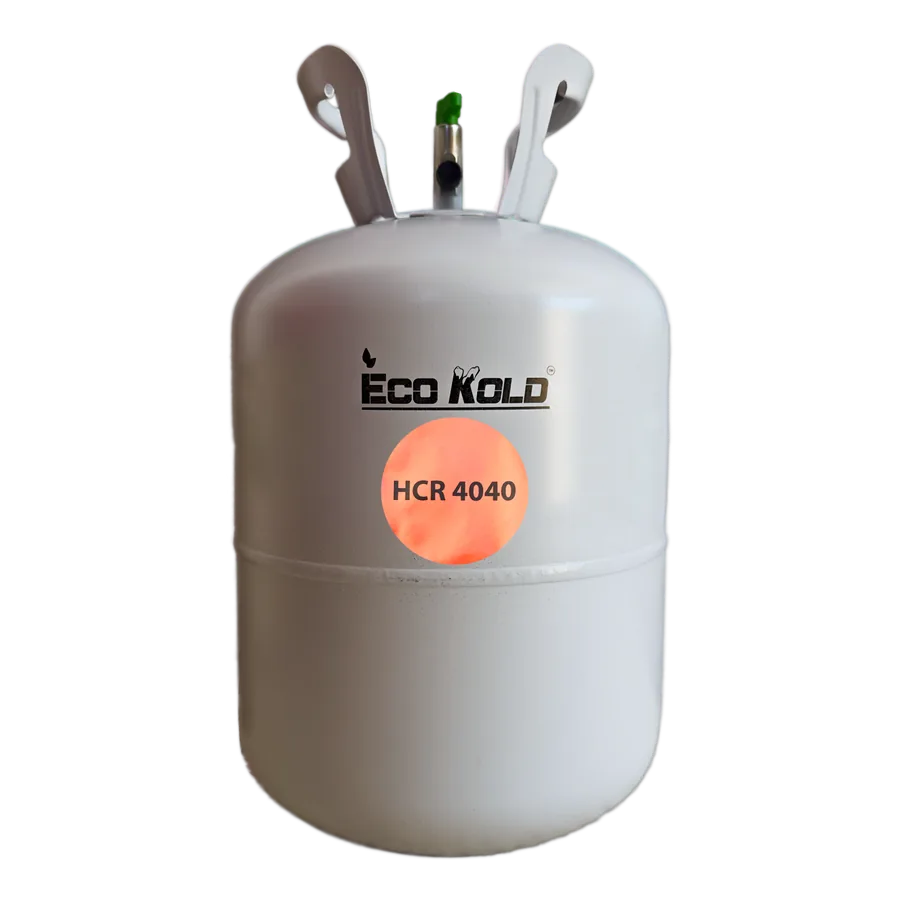
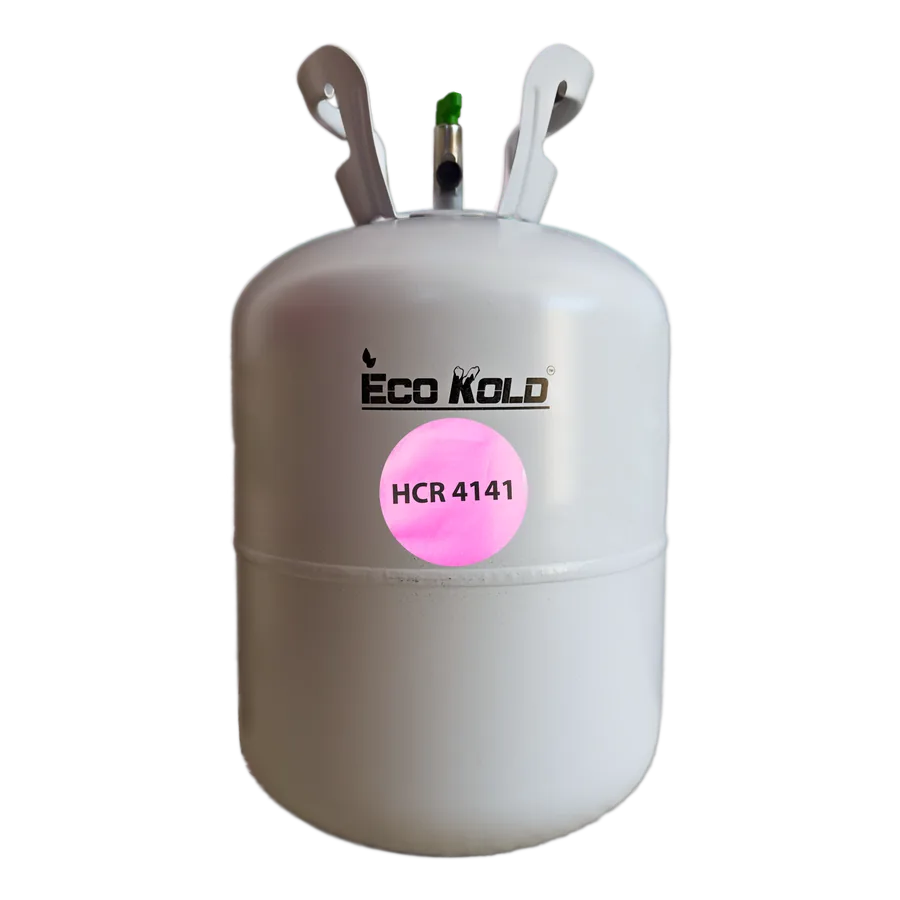
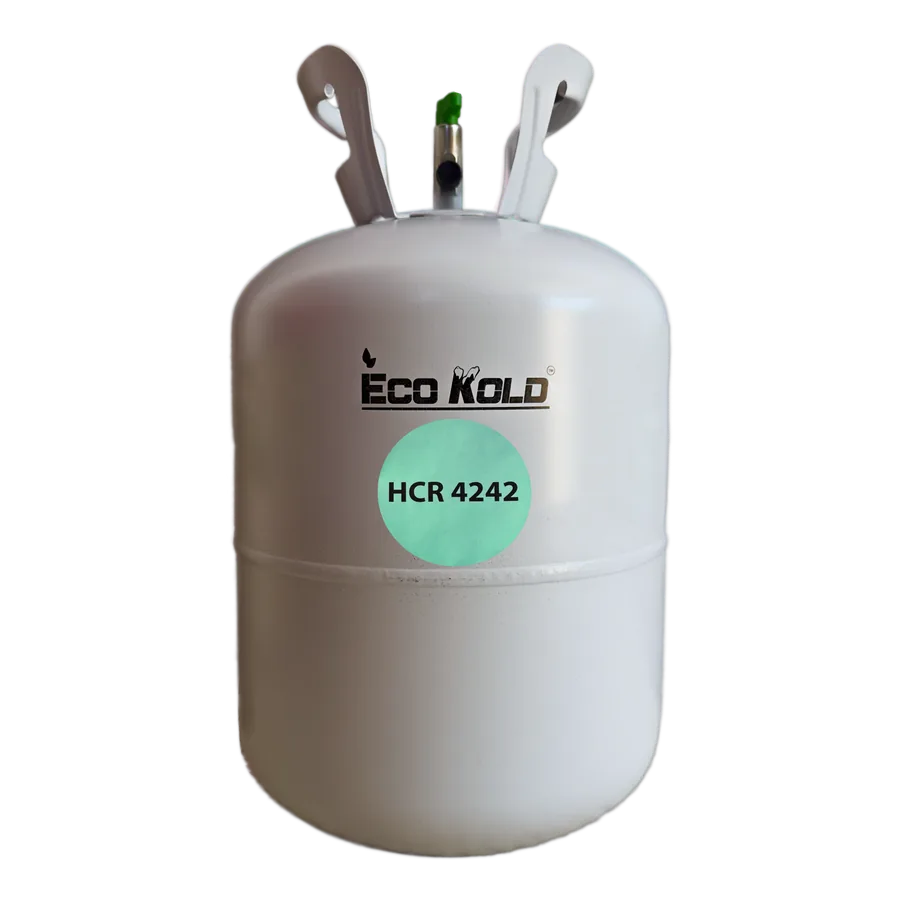
Specifications & safety classification.
For engineers, contractors, and procurement. Full pressure-temperature data and Safety Data Sheet linked at the bottom.
Operating envelope
| Composition | Hydrocarbon blend (propane/isobutane base) |
|---|---|
| Operating pressure | 45 PSI · suction side |
| Discharge pressure | ~170 PSI · vs. R-134A's ~220 PSI |
| Exit temperature | 4–6 °C at chiller duty point |
| Critical temperature | 96.7 °C |
| Oil compatibility | POE · PAG · mineral oil |
Environmental & safety
| GWP | <1 |
|---|---|
| ODP | 0 |
| Safety class | A3 · flammable · standard HC handling |
| EPA SNAP | Submitted: under review · not yet listed |
| Charge limit | Per IEC 60335-2-89, IEC 60079-15, transport-specific code |
| UN number | UN 1965 (LPG, hydrocarbon mix) |
Three steps. Same equipment. One certified technician.
Retrofit-ready: minimal to no equipment changes. The retrofit takes a weekend on a typical commercial site. Hydrocarbon refrigerant (ASHRAE A3, flammable); install by a qualified technician.
Recover the legacy refrigerant.
Pull the R-134A charge through a certified recovery machine into an approved reclaim cylinder. Never vent. EPA-licensed technicians only.
Pull a deep vacuum.
Evacuate the system to 500 microns or lower. Hold the vacuum to verify no leaks. This step is identical to a standard refrigerant change-out.
Charge with 62% less HCR 4343A.
Weigh in 380 g of HCR 4343A for every 1,000 g of R-134A removed. Verify suction pressure at ~45 PSI. Document the charge on the system label.
Specs, safety, and install instructions.
Everything a technician, engineer, or procurement team needs to evaluate HCR 4343A. All PDFs, no email gate.
Common questions about HCR 4343A.
What does HCR 4343A replace?
HCR 4343A is the drop-in hydrocarbon refrigerant replacement for R-134 and R-134A in commercial chillers, transport refrigeration, and cold-chain shipping containers. The lowest absolute-pressure curve in the Eco Kold line, matching the low-pressure systems R-134 was designed for.
What is the GWP of HCR 4343A?
HCR 4343A has a Global Warming Potential of <1. R-134A carries a GWP of 1,430, and has been a primary target of the EU F-gas Regulation and the AIM Act phase-down in the U.S.; HCR 4343A is the GWP <1 replacement path.
Is HCR 4343A EPA SNAP listed for chiller and transport refrigeration?
HCR 4343A has been submitted to the EPA SNAP program and is under review; it is not yet listed. The blend is A3 classified and complies with IEC 60335-2-89 charge limits for hydrocarbon refrigerants.
Can HCR 4343A be used in vehicle air conditioning?
No. US EPA’s SNAP program lists all flammable refrigerants except HFC-152a and HFO-1234yf, hydrocarbons included, as unacceptable in new and retrofit motor vehicle air conditioning.
What oil is compatible with HCR 4343A in chiller applications?
HCR 4343A is compatible with mineral oil, POE (polyolester), and alkylbenzene oils: the standard chiller oils. For systems originally specified with PAG oil (more common in transport applications), confirm compatibility through the equipment manufacturer.
Chillers or transport cooling on R-134A?
Send us the system type and current charge. We'll match the right HCR 4343A quantity, quote pricing, and connect you with a certified installer for the application: chillers or transport.