Full engineering specifications. All four Eco Kold blends.
Composition, safety classification, oil compatibility, charge math, UN number, applicable codes. Everything you need to evaluate a drop-in retrofit at the spec-sheet level. Per-blend Safety Data Sheets and Installation Instructions are linked from each product page.
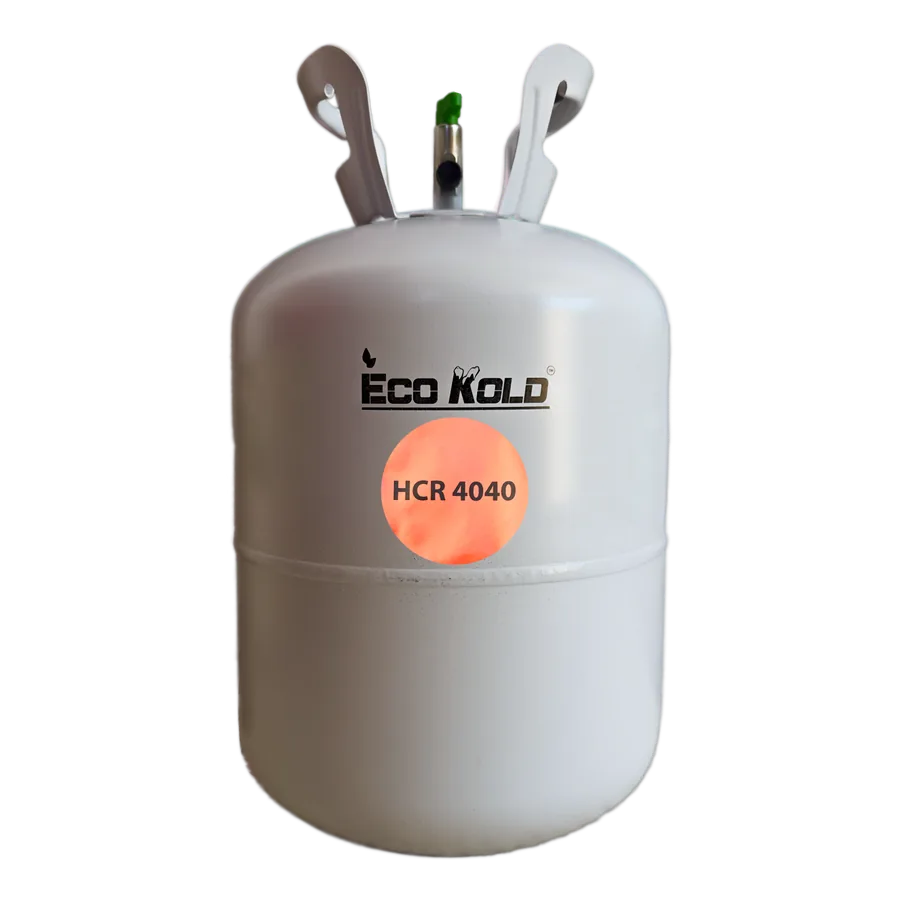
Low-temp refrigeration · cold storage · supermarket cases.
Engineered for the duty point of R-404A and R-507. Mineral-oil and POE compatible: no oil change required on most existing systems.
Operating envelope
| Composition | Hydrocarbon blend (propane/isobutane base) |
|---|---|
| Charge weight | 400 g · 60% less than R-404A baseline (1,000 g) |
| Operating pressure | 50 PSI · suction side at low-temp duty |
| Discharge pressure | ~180 PSI · vs. R-404A's ~290 PSI |
| Exit temperature | −25 to −10 °C across low- and mid-temp duty |
| Critical temperature | 96.7 °C |
| Oil compatibility | Mineral oil · POE · alkylbenzene |
Environmental & safety
| GWP | <1 |
|---|---|
| ODP | 0 |
| Safety class | A3 · flammable · standard HC handling |
| EPA SNAP | Submitted: under review, not yet listed |
| Charge limit | Per IEC 60335-2-89 and local refrigerant-handling code |
| UN number | UN 1965 (LPG, hydrocarbon mix) |
| Storage | Steel cylinder, ambient temperature, away from ignition |
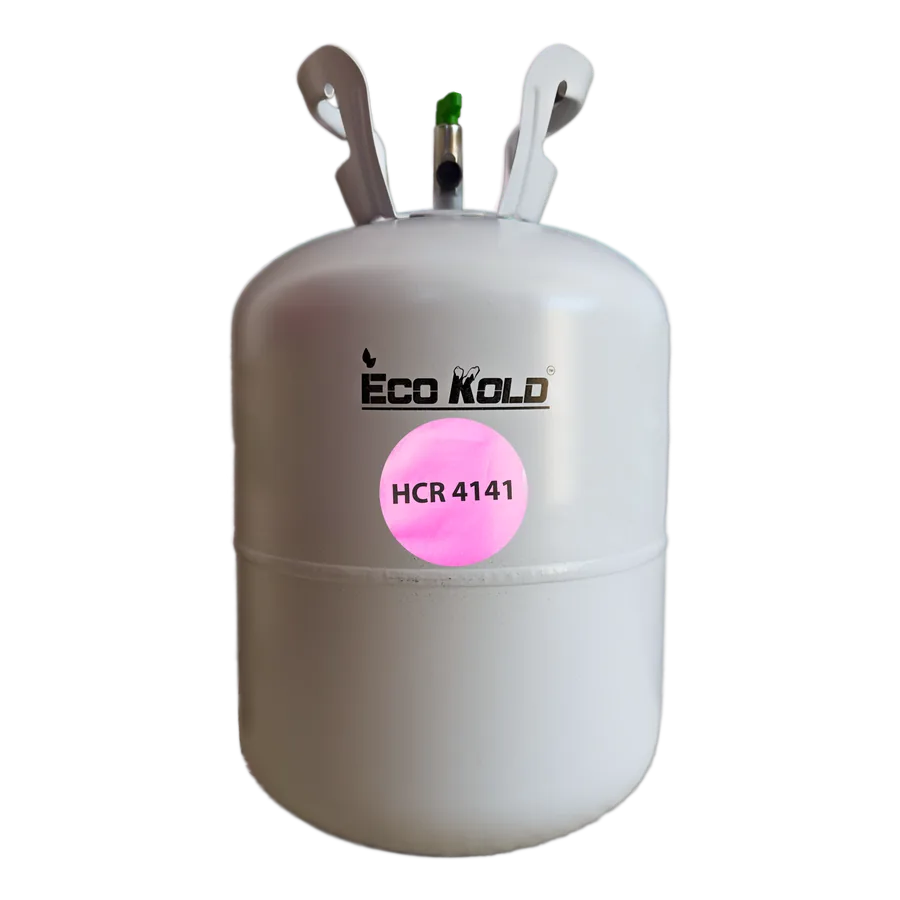
Air conditioning (not split-system retrofits).
The AC workhorse of the Eco Kold line. Matches R-410A's high-side pressure window so existing condensers and expansion valves stay in place.
Operating envelope
| Composition | Hydrocarbon blend (propane/isobutane base) |
|---|---|
| Charge weight | 350 g · 65% less than R-410A baseline (1,000 g) |
| Operating pressure | 75–80 PSI · suction side |
| Discharge pressure | ~240 PSI · vs. R-410A's ~400 PSI |
| Exit temperature | 8–10 °C at AC duty point |
| Critical temperature | 96.7 °C |
| Oil compatibility | Mineral oil · POE · alkylbenzene |
Environmental & safety
| GWP | <1 |
|---|---|
| ODP | 0 |
| Safety class | A3 · flammable · standard HC handling |
| EPA SNAP | Submitted: pending a final ruling, not yet listed |
| Charge limit | Per IEC 60335-2-89 and local refrigerant-handling code |
| UN number | UN 1965 (LPG, hydrocarbon mix) |
| Storage | Steel cylinder, ambient temperature, away from ignition |
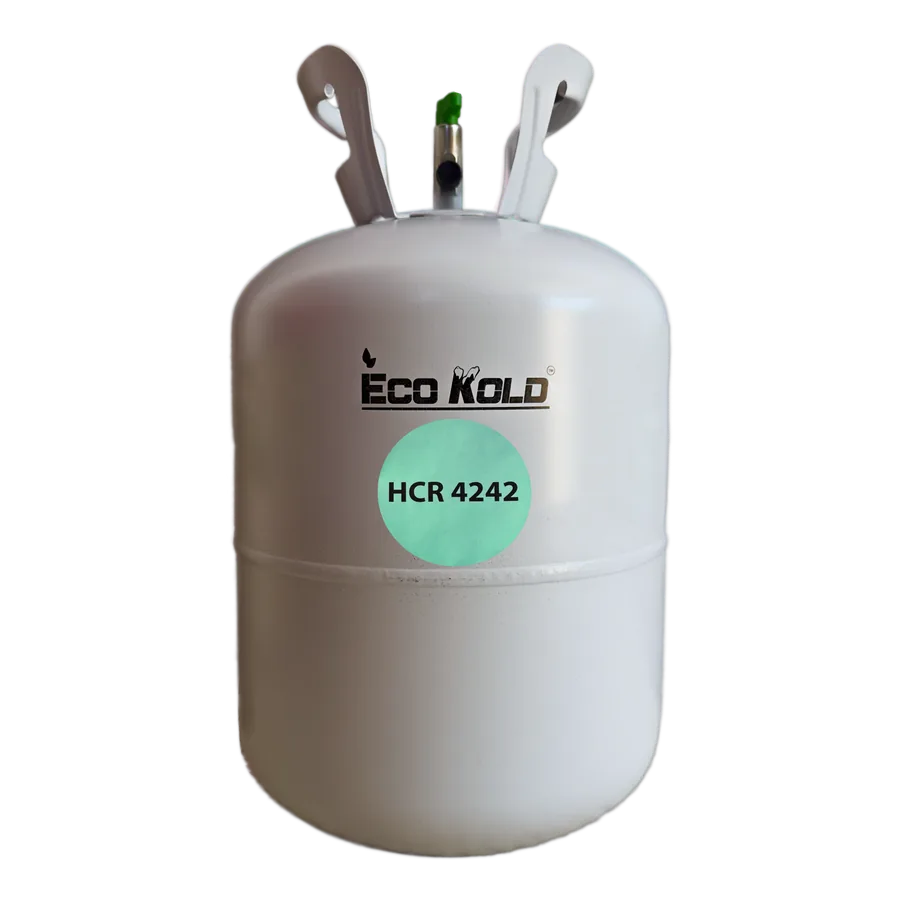
Legacy systems · pre-2010 AC and refrigeration.
Designed specifically for R-22 systems still in service, where the legacy refrigerant is increasingly scarce and expensive.
Operating envelope
| Composition | Hydrocarbon blend (propane/isobutane base) |
|---|---|
| Charge weight | 450 g · 55% less than R-22 baseline (1,000 g) |
| Operating pressure | 50 PSI · suction side |
| Discharge pressure | ~225 PSI · vs. R-22's ~250 PSI |
| Exit temperature | 6–9 °C at AC duty, −20 °C at low-temp |
| Critical temperature | 96.7 °C |
| Oil compatibility | Mineral oil · alkylbenzene (R-22's existing oil works) |
Environmental & safety
| GWP | <1 |
|---|---|
| ODP | 0 · vs. R-22's 0.055 |
| Safety class | A3 · flammable · standard HC handling |
| EPA SNAP | Not submitted; not available for sale in the United States |
| Charge limit | Per IEC 60335-2-89 and local refrigerant-handling code |
| UN number | UN 1965 (LPG, hydrocarbon mix) |
| Storage | Steel cylinder, ambient temperature, away from ignition |
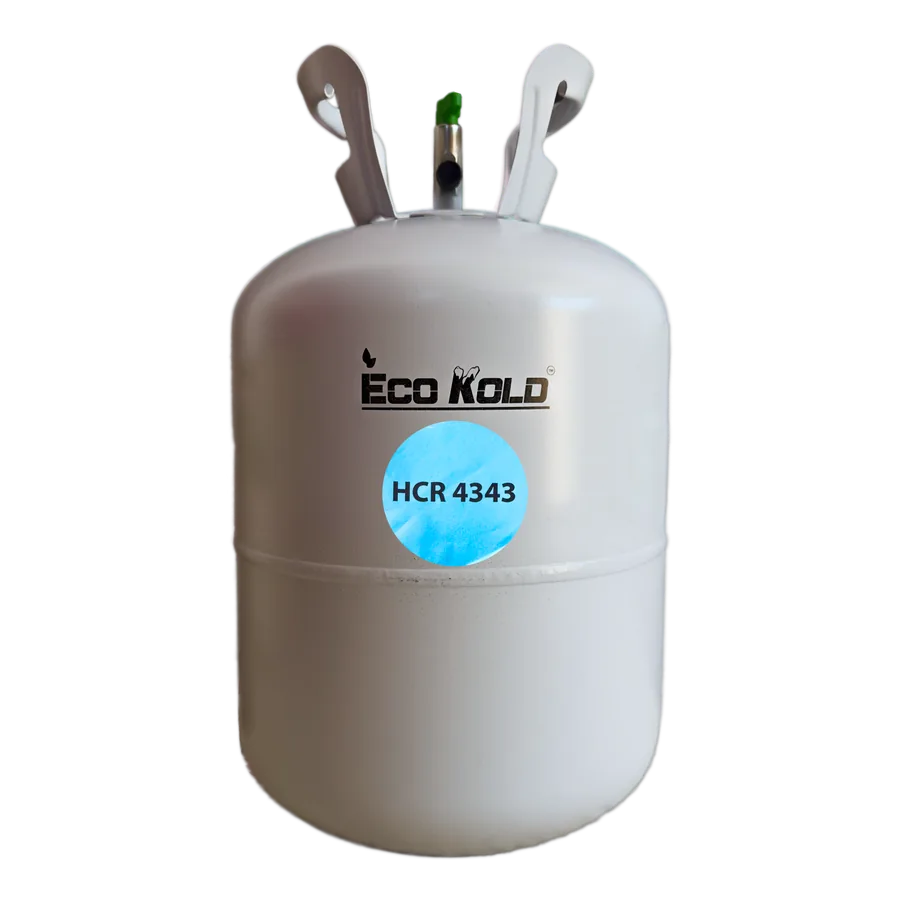
Chillers · cold-chain · transport refrigeration.
For systems running R-134a: commercial chillers and refrigerated transport. Matches R-134a's pressure curve through the chiller duty range.
Operating envelope
| Composition | Hydrocarbon blend (propane/isobutane base) |
|---|---|
| Charge weight | 380 g · 62% less than R-134a baseline (1,000 g) |
| Operating pressure | 45 PSI · suction side |
| Discharge pressure | ~165 PSI · vs. R-134a's ~190 PSI |
| Exit temperature | 2–6 °C at chiller duty |
| Critical temperature | 96.7 °C |
| Oil compatibility | Mineral oil · POE · PAG (verify with the equipment manufacturer) |
Environmental & safety
| GWP | <1 |
|---|---|
| ODP | 0 |
| Safety class | A3 · flammable · standard HC handling |
| EPA SNAP | Submitted: under review, not yet listed |
| Charge limit | Per IEC 60335-2-89 and local refrigerant-handling code |
| UN number | UN 1965 (LPG, hydrocarbon mix) |
| Storage | Steel cylinder, ambient temperature, away from ignition |
Standards every Eco Kold blend meets.
The whole line shares the same regulatory and safety footprint. Composition, Safety class, and UN number do not change between blends: only the pressure curve and oil-side notes do.
IEC 60335-2-89
The international standard for hydrocarbon refrigerants in commercial appliances. Defines maximum allowable charge per system based on space volume and ventilation. All Eco Kold installs are sized within these limits.
A3: flammable refrigerant
Every Eco Kold blend is classified A3 (ASHRAE 34 higher-flammability class), handled with the standard hydrocarbon-refrigerant practice that has been used safely in industrial cooling for decades. Installation must be performed by a certified hydrocarbon-rated technician and follow the refrigerant-handling code of the local jurisdiction, including charge-limit, ventilation, and system-labeling requirements.
EPA SNAP status
EPA SNAP review is in progress and varies by product: HCR 4141 is submitted and pending a final ruling; HCR 4040, 4343, and 4343A are submitted and under review; the EPA SNAP submission for HCR 4242 is pending. We don't claim a SNAP listing where the status is pending, under review, or not submitted. Approved end-uses and availability vary by country, so contact us for the current status in your market.
Engineering compliance, oil compatibility, code.
Frequently asked questions about EPA SNAP submission status, safety classification, IEC 60335-2-89 compliance, and shipping classification.
Are Eco Kold blends EPA SNAP listed?
EPA SNAP review is in progress and varies by product: HCR 4141 is submitted and pending a final ruling; HCR 4040, 4343, and 4343A are submitted and under review; the EPA SNAP submission for HCR 4242 is pending. We don't claim a SNAP listing where the status is pending, under review, or not submitted. Approved end-uses and availability vary by country, so contact us for the current status in your market.
What Safety class are Eco Kold hydrocarbon refrigerants?
All Eco Kold blends are classified A3 (ASHRAE 34 higher-flammability class), the same class as propane and isobutane. Installation must follow local refrigerant-handling code for proper handling, machinery-room requirements, and venting. A certified hydrocarbon technician is required.
What oil is compatible with HCR refrigerants?
Eco Kold blends are compatible with mineral oil, POE (polyolester), and alkylbenzene oils. For HCR 4242 (R-22 retrofit), the existing mineral oil in the system can stay in place.
Does Eco Kold meet IEC 60335-2-89 charge limits?
Yes. The IEC 60335-2-89 standard sets the maximum allowable hydrocarbon refrigerant charge per system based on space volume and ventilation. Every Eco Kold installation is sized within these limits. Charge calculations are provided with every quote.
What is the UN number for hydrocarbon refrigerants?
Eco Kold blends ship under UN 1965 (Hydrocarbon gas mixture, liquefied, n.o.s.), the standard classification for LPG hydrocarbon mixtures. Storage is in standard steel cylinders at ambient temperature, away from ignition sources.
Have a system running on R-22, R-410A, R-404A, or R-134a?
Send us the equipment make, model, and current refrigerant. We'll match the right Eco Kold blend, quote pricing, and connect you with a certified installer in your region, usually within one business day.