Sites targeting up to 50% cooling-energy reduction, without equipment capex.
For facilities running EnergyStar, BREEAM, LEED-EBOM, or internal ESG energy-reduction targets. HCR retrofits deliver measurable kWh reduction on existing equipment, with third-party audit documentation that fits the certification reporting format. Independent field measurement is underway; verified results will be published once cleared.
Cooling is the largest line on most facility electric bills.
In warm climates and mission-critical facilities, cooling load drives 35–60% of total electricity consumption. Compressor work — moving refrigerant against a pressure differential — is most of that. A refrigerant that runs at lower pressure does less compressor work per cooling-ton-hour. That's the whole mechanism.
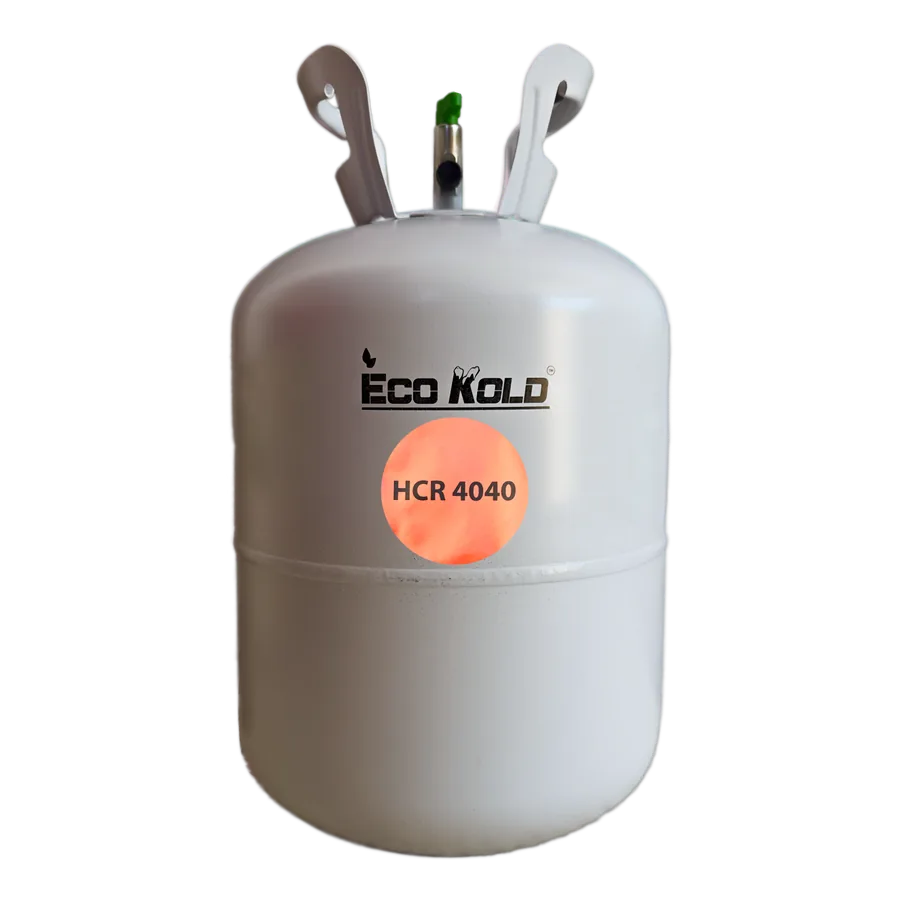
HCR 4040 · 30–45% reduction
Low-temp refrigeration retrofits from R-404A. Cold storage and supermarket case applications. The energy reduction is steady: refrigeration runs at higher duty cycles than AC, so the gains accumulate continuously.
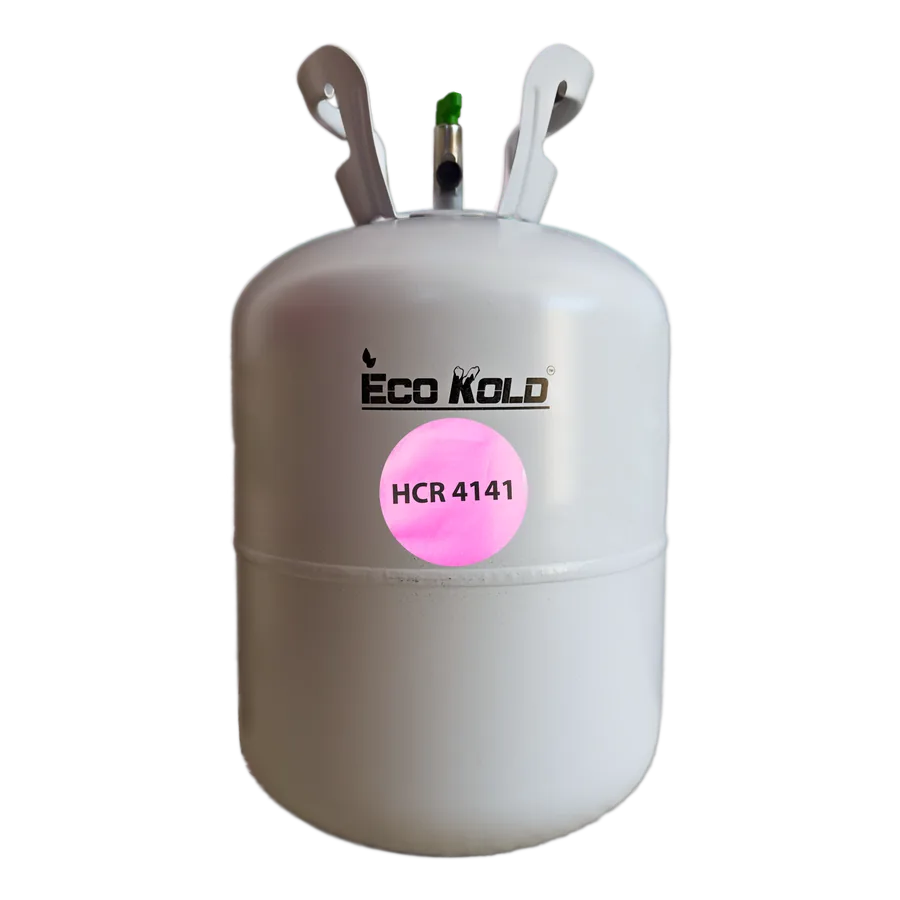
HCR 4141 · 30–50% reduction
AC retrofits from R-410A. The largest installed base, and the most common retrofit. Not for retrofit of split-system air conditioners or heat pumps, which US EPA lists as unacceptable for hydrocarbon refrigerants. Energy savings track cooling-degree-days; warmer climates see higher absolute reductions.
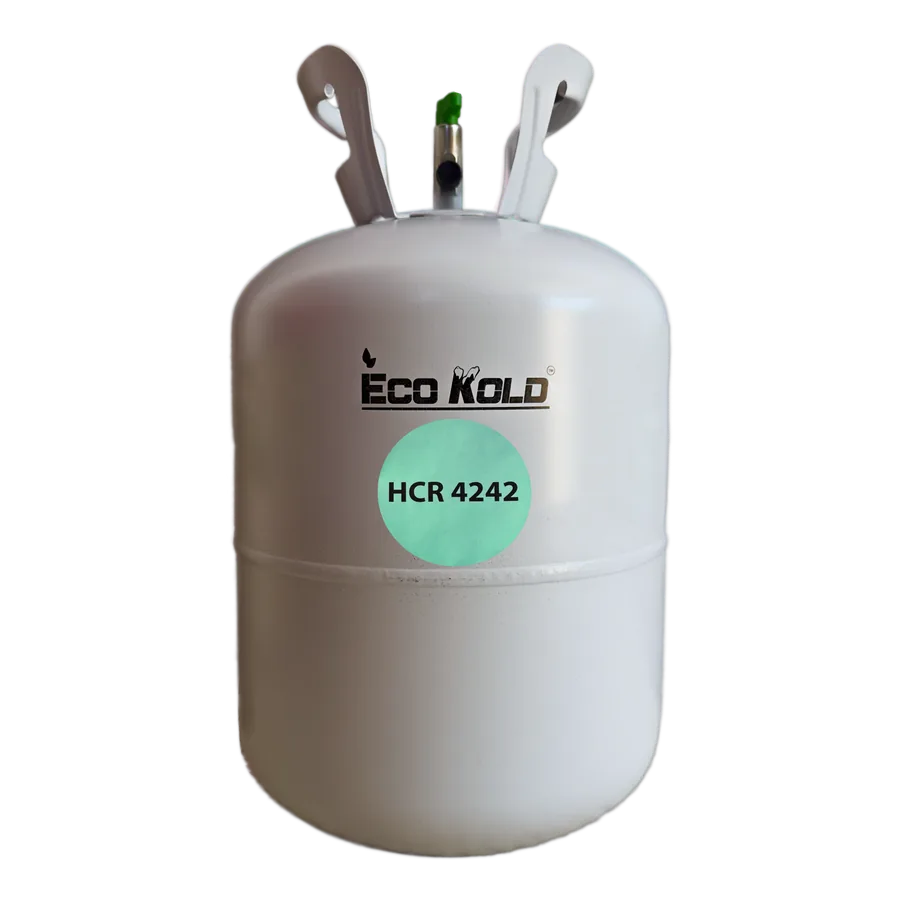
HCR 4242 · R-22 retrofits
R-22 legacy AC and refrigeration retrofits. The highest documented reductions in the line, because R-22 baselines tend to be older, less-efficient equipment. Independent field measurement is underway; verified results will be published once cleared.
Reduction numbers come from measurement, not modelling.
For energy programs, the reduction has to be defensible. Eco Kold's standard audit uses a calibrated power-logging meter measuring the AC's main circuit current and kWh consumption across a 24-hour baseline and a 24-hour post-retrofit window on consecutive same-weather days.
Baseline measurement
24-hour kWh and current logging on the existing refrigerant, at the normal operating thermostat setpoint, in normal occupancy/loading conditions.
Retrofit
Recovery, vacuum, recharge by weight with the matching HCR blend. Same equipment, same thermostat, same operating conditions.
Post-retrofit measurement
Another 24-hour kWh and current log, same setpoint and conditions. The delta is reported as kWh reduction, peak demand reduction, and current draw reduction.
What the numbers look like at facility scale.
A representative commercial AC retrofit costs less than 10% of equivalent equipment replacement. Energy reduction returns the investment in months, not years, and the system stays on the GWP <1 charge for the rest of its operating life.
Representative · single 5-ton commercial AC
| Annual cooling kWh on R-410A | ~22,000 kWh |
|---|---|
| Audited reduction · HCR 4141 | 40% (mid-band) |
| Annual kWh saved | ~8,800 kWh |
| At US$ 0.18/kWh | ~$1,584/yr saved |
| Retrofit cost (refrigerant + install) | ~$650–$1,200 range |
| Payback period | 5–9 months |
Representative · 50-unit supermarket estate
| Annual cooling kWh on R-404A | ~1.8M kWh |
|---|---|
| Audited reduction · HCR 4040 | 35% (mid-band) |
| Annual kWh saved | ~630,000 kWh |
| At US$ 0.14/kWh | ~$88,000/yr saved |
| Retrofit cost (50 units) | ~$30,000–$50,000 range |
| Payback period | 4–7 months |
Numbers above are representative. Actual payback at a specific site depends on local electricity rates, cooling-degree-day climate, system age, and audit conditions. Full per-site projections are part of the quote.
Documentation that fits your certification or ESG framework.
The audit deliverables are designed to drop into the most common energy-reporting workflows without rework.
EnergyStar / Portfolio Manager
Audit-meter CSV exports map directly to Portfolio Manager's energy-meter import. The retrofit shows as a measurable reduction in the building's intensity score across the next reporting period.
BREEAM / LEED-EBOM
The audit report (PDF + CSV) and the refrigerant-substitution documentation cover the Energy and Pollution credit categories. Eco Kold provides the supporting GWP and SDS documentation needed for verification.
ESG / sustainability reports
For sites reporting Scope 1 + Scope 2 reductions, the retrofit produces both: refrigerant-leak-attributable emissions drop to near zero, and electricity-attributable Scope 2 drops in line with the audited kWh reduction.
How the audited numbers map to your reporting framework.
EnergyStar / BREEAM / LEED documentation, payback math, and how the retrofit compares to equipment replacement.
How is the energy reduction measured?
Eco Kold’s standard methodology uses a calibrated power-logging meter recording current and kWh consumption on the AC’s main circuit across a 24-hour baseline run and a 24-hour post-retrofit run on consecutive same-weather days. Same equipment, same thermostat setpoint, same occupancy. The delta is reported as kWh reduction, peak demand reduction, and current draw reduction.
Do hydrocarbon retrofits qualify for EnergyStar credits?
Yes. Audit-meter CSV exports map directly to EnergyStar Portfolio Manager’s energy-meter import format. The retrofit shows as a measurable reduction in the building’s energy intensity score across subsequent reporting periods. The same audit data supports BREEAM, LEED-EBOM, and most internal ESG reporting frameworks.
What is the typical payback period for a commercial retrofit?
Representative payback for a 5-ton commercial AC retrofit on R-410A is 5–9 months at typical U.S. electricity rates. A 50-unit supermarket estate retrofitted from R-404A typically pays back in 4–7 months. Project-specific projections are provided with every quote based on local rates, climate, and equipment list.
Can audit results be used for sustainability reports?
Yes. The audit deliverables (audit-meter CSV, before/after kWh report, GWP and SDS supporting documents, refrigerant-substitution analysis) are designed to drop into Scope 1 and Scope 2 reporting frameworks without rework. See the sustainability page for the full reporting-framework breakdown.
How does this compare to replacing the equipment entirely?
A refrigerant retrofit costs a fraction of equipment replacement, typically under 10% of equivalent capex, and the energy reduction is comparable to or better than installing a new HFC system. The retrofitted equipment runs on a GWP <1 charge for the rest of its operating life with no embodied-carbon footprint from manufacturing a new unit.
Have a system running on R-22, R-410A, R-404A, or R-134a?
Send us the equipment make, model, and current refrigerant. We'll match the right Eco Kold blend, quote pricing, and connect you with a certified installer in your region, usually within one business day.